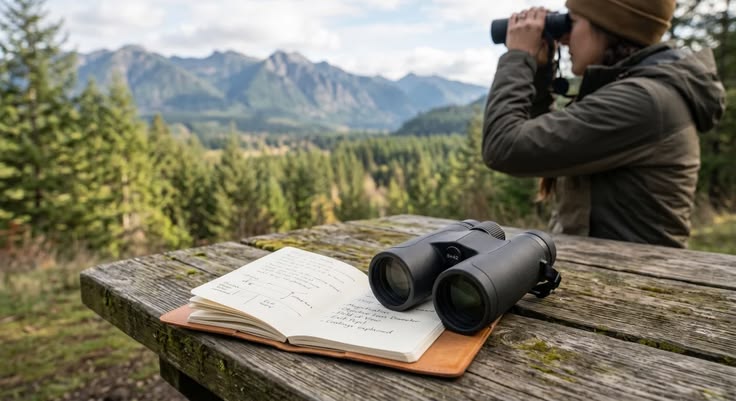
Choosing the right binoculars can make outdoor experiences more immersive, whether you’re watching birds in a local nature reserve, observing wildlife on safari, hiking through the countryside or exploring a new destination. The best binoculars for outdoor activities should provide a clear image without becoming uncomfortable to carry. Magnification, objective lens size, field of view, weight and weather resistance all influence how useful a pair will be.
For travellers and outdoor enthusiasts, binoculars are a relatively simple piece of outdoor gear, but choosing between different specifications can be confusing. This binocular buying guide explains the key features to consider and how to match them with activities such as bird watching, wildlife viewing, hiking and travel.
Why Choose Binoculars for Outdoor Activities?
Outdoor environments often require you to observe subjects from a distance. Binoculars bring distant details closer without requiring the weight or complexity of larger spotting scopes.
Good binoculars for outdoor activities can help you identify birds, observe animals, appreciate landscapes and follow distant subjects while travelling. They are particularly useful when you need a balance between magnification and portability.
Before buying, think about:
- The activities you enjoy most.
- How frequently you’ll carry the binoculars.
- Whether you’ll use them during daylight or low-light conditions.
- The typical distance between you and your subject.
- Whether you expect rain or humid conditions.
- How much you are comfortable spending.
The right specification depends heavily on the activity, so there is no single pair that is perfect for everyone.
Understanding Binocular Magnification
Magnification tells you how many times closer an object appears through the binoculars compared with viewing it with your eyes.
For example, 8x binoculars make a distant object appear approximately eight times closer, while 10x binoculars provide greater magnification.
However, higher magnification isn’t automatically better. Strong magnification can make hand movements more noticeable and reduce the apparent stability of the image.
8x vs 10x Binoculars
For general outdoor use, both are popular options.
- 8x: Easier to hold steady and generally offers a wider field of view.
- 10x: Provides more detail at longer distances but can be harder to stabilise.
- 12x or higher: Better suited to specialised viewing and may benefit from additional support.
For hiking, travel and general bird watching, 8x binoculars are often a practical starting point.
What Is the Objective Lens?
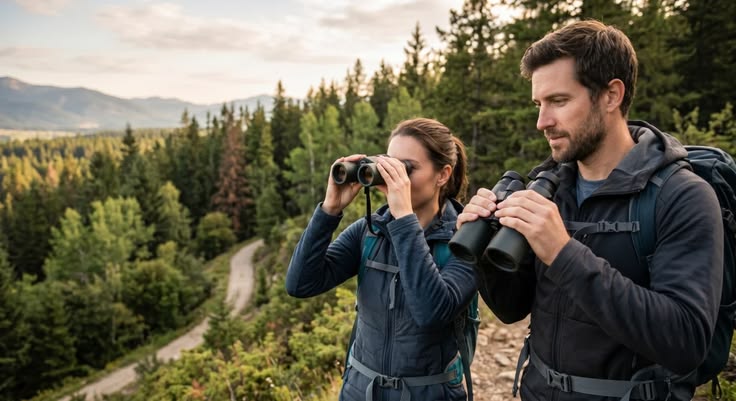
The objective lens is the larger lens at the front of the binoculars. Its diameter influences how much light can enter the optical system.
Larger objective lenses can be useful in lower-light conditions, but they also generally make binoculars larger and heavier.
Common combinations include:
- 8×25: Very compact and travel-friendly.
- 8×32: Good balance between size and optical performance.
- 8×42: Versatile option for wildlife and bird watching.
- 10×42: Useful when additional magnification is desirable.
- 10×50: Larger and potentially useful for lower-light observation.
For most daytime outdoor adventures, a mid-sized objective lens can provide a good compromise between brightness, portability and comfort.
Field of View Matters for Wildlife
The field of view describes how much of the scene you can see through the binoculars at a particular distance. A wider field of view can make it easier to locate moving birds or animals.
This becomes especially important during wildlife viewing, where a subject can disappear from sight quickly.
For fast-moving subjects, prioritise binoculars that provide:
- A reasonably wide field of view.
- Smooth focusing.
- Comfortable eye placement.
- Good image clarity.
- Easy-to-adjust focus controls.
Higher magnification can sometimes reduce the field of view, which is another reason why maximum magnification isn’t always the best choice.
Binoculars for Bird Watching
Bird watchers often need to identify small details such as plumage, markings and behaviour without getting close to the subject.
For this reason, bird watching binoculars should combine sharp optics with manageable weight and a useful field of view. An 8×32 or 8×42 configuration can be versatile for many daytime observations.
If you’re frequently walking between observation points, weight becomes particularly important. Carrying heavy binoculars around your neck for several hours can become uncomfortable.
Features Bird Watchers Should Consider
- 8x or 10x magnification.
- Good close-focus capability.
- Wide field of view.
- Clear colour reproduction.
- Comfortable grip.
- Lightweight construction.
Waterproof Binoculars for Changing Weather
Outdoor adventures don’t always happen under perfect weather conditions. Waterproof binoculars can provide additional protection when hiking in rain, visiting coastal areas or travelling through humid environments.
However, don’t confuse waterproofing with complete immunity from damage. Always follow the manufacturer’s care instructions and avoid exposing optical equipment to conditions beyond its stated rating.
Useful weather-related features can include:
- Waterproof construction.
- Fog-resistant optics.
- Rubberised protective armour.
- Secure lens caps.
- Durable housing.
For outdoor activities in the UK, where rain can appear unexpectedly, weather-resistant construction can be particularly useful.
Binoculars for Travel: Size and Weight
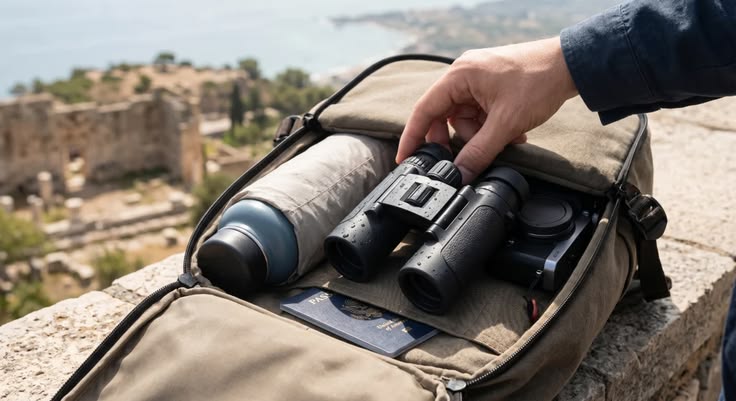
Travel changes the priorities. A pair of binoculars that is excellent for stationary wildlife observation may be inconvenient when you’re already carrying a camera, water bottle and other hiking equipment.
Binoculars for travel should ideally be compact enough to pack easily while still offering useful optical performance.
Consider:
- Overall weight.
- Foldable or compact design.
- Protective case.
- Strap comfort.
- Lens protection.
- Resistance to dust and moisture.
If you are travelling internationally, compact binoculars can be easier to fit into luggage without sacrificing too much functionality.
How Much Should You Spend?
Binocular prices can range from inexpensive entry-level models to premium optical equipment. Spending more can provide improvements in optical quality, construction and durability, but the most expensive model isn’t necessarily the best choice for your needs.
A useful approach is to determine your activity first and then compare binoculars within the appropriate specification range.
For occasional travel, a compact mid-range pair may be sufficient. Dedicated bird watchers or wildlife enthusiasts may benefit from investing more in optical quality and weather resistance.
Quick Binocular Buying Checklist
Before purchasing binoculars for outdoor activities, check:
- Magnification.
- Objective lens diameter.
- Field of view.
- Close-focus distance.
- Weight.
- Eye relief.
- Waterproofing.
- Fog resistance.
- Build quality.
- Warranty.
- Carrying case and strap.
This checklist can help you compare products based on practical features rather than marketing claims.
FAQs About Binoculars for Outdoor Activities
1. What magnification is best for outdoor activities?
8x is a versatile choice for many outdoor activities because it offers useful magnification while remaining relatively easy to hold steady. 10x can be better for distant wildlife.
2. Are 8x or 10x binoculars better for bird watching?
Both can work well. 8x binoculars generally provide easier handling and a wider field of view, while 10x models offer additional magnification for distant birds.
3. What objective lens size should I choose?
For general outdoor use, 32mm to 42mm objective lenses provide a useful balance between optical performance and portability.
4. Are waterproof binoculars worth buying?
Yes, particularly if you regularly hike, travel or observe wildlife in wet or unpredictable conditions. Waterproof construction provides additional protection against moisture.
5. What are the best binoculars for travel?
Compact binoculars with moderate magnification, manageable weight and durable construction are generally suitable for travel. An 8×25 or 8×32 configuration can be practical for portability.
Conclusion
The best binoculars for outdoor activities balance magnification, optical performance, field of view, portability and durability. For general hiking and travel, compact 8x binoculars can provide an excellent combination of convenience and usability. Wildlife enthusiasts may prefer 8×42 or 10×42 configurations for additional optical capability. Whether you’re exploring UK countryside, watching birds in a nature reserve or travelling overseas for wildlife viewing, the right binoculars can help you notice details that might otherwise remain invisible. Ready to enhance your next outdoor adventure? Explore quality binoculars and choose a pair that matches your travel, hiking and wildlife-viewing needs.