Good food can make a camping trip feel much more comfortable, but cooking outdoors requires equipment that is portable, durable and easy to use. The right outdoor cooking gear can turn a basic campsite into a practical camp kitchen, whether you’re preparing breakfast at a family campsite, making dinner during a hiking trip or enjoying a weekend adventure with friends.
Choosing the right camping cooking equipment depends on how many people you’re feeding, how far you’re travelling and what kind of meals you want to prepare. A lightweight setup may be ideal for backpacking, while car campers can carry larger cookware, coolers and a portable grill. This guide covers the outdoor cooking essentials worth considering for different camping styles.
How to Choose Outdoor Cooking Gear
The best outdoor cooking gear should make meals easier without adding unnecessary weight or complexity. Start by thinking about your destination, transportation and cooking preferences.
A car-camping setup can include a full-size stove, cooler and multiple cooking pans, whereas a backpacking setup needs to prioritise compactness and low weight. Families may also need larger cookware and additional storage for food.
Before buying equipment, consider:
- Number of people you need to feed.
- Type and duration of your trip.
- Available storage space.
- Cooking methods you prefer.
- Fuel availability at your destination.
- Weather conditions.
- Ease of cleaning.
- Weight and portability.
For camping trips in the UK, changing weather can be an important consideration. A sheltered cooking area and equipment designed for outdoor conditions can make meal preparation considerably easier.
Camping Stove: The Heart of a Camp Kitchen
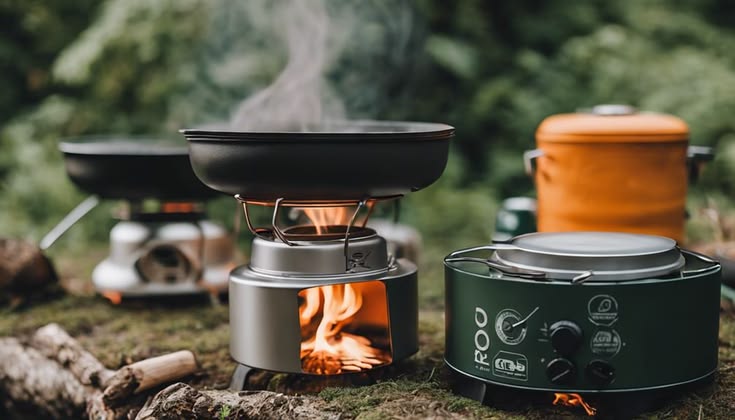
A camping stove is one of the most useful pieces of camping cooking equipment. It provides a controlled cooking surface for boiling water, heating food and preparing complete meals.
Different stove designs suit different situations. Compact single-burner models are convenient for solo travellers and backpackers, while larger two-burner stoves are better for families and group camping.
What to Look for in a Camping Stove
Consider:
- Number of burners.
- Fuel type and availability.
- Weight.
- Ignition system.
- Wind resistance.
- Cooking surface.
- Simmer control.
- Ease of cleaning.
Fuel compatibility is particularly important. Check the manufacturer’s recommended fuel system before your trip and make sure you understand how to transport and store fuel safely.
Portable Grill for Outdoor Meals
A portable grill is useful when grilling is a major part of your camping experience. Burgers, vegetables, sausages and other foods can be prepared over a suitable grill, making it popular for family camping and weekend trips.
Portable grills come in different sizes and fuel configurations. Smaller models are easier to transport, while larger designs offer more cooking space.
When comparing grills, consider:
- Cooking area.
- Total weight.
- Fuel type.
- Heat control.
- Setup time.
- Cleaning requirements.
- Transportability.
Always check whether your campsite permits open flames or specific types of cooking equipment before setting up.
Cookware for Camping
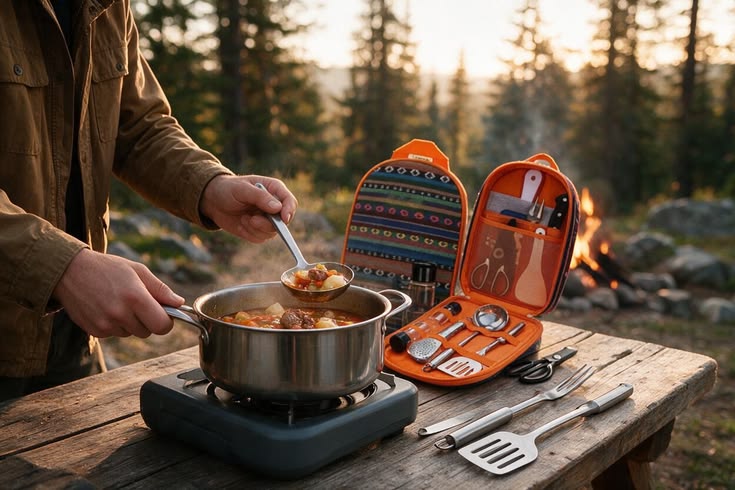
Good cookware should be lightweight, durable and easy to clean. You don’t necessarily need to recreate your entire kitchen at the campsite.
A simple cooking kit can handle most basic meals:
- Saucepan or cooking pot.
- Frying pan.
- Kettle.
- Cutting board.
- Knife.
- Cooking spoon.
- Tongs.
- Plates and bowls.
For backpacking, nesting cookware can save valuable space because multiple pieces fit inside one another. Car campers have more freedom to bring larger pans and specialised equipment.
Choose cookware based on your stove or grill rather than buying equipment first and discovering that it isn’t compatible with your cooking setup.
Coolers and Food Storage
Coolers are another essential part of an outdoor kitchen, particularly for trips involving fresh meat, dairy products and chilled drinks. The right cooler should provide enough capacity without becoming unnecessarily difficult to transport.
For longer trips, consider the cooler’s insulation, construction and drainage system. Organising food into separate containers can also make it easier to find ingredients without repeatedly opening the cooler.
Good food-storage habits include:
- Keep perishable foods properly chilled.
- Separate raw foods from ready-to-eat ingredients.
- Use sealed containers.
- Minimise unnecessary cooler opening.
- Follow local food-safety guidance.
- Dispose of food waste responsibly.
In warmer climates, maintaining appropriate food temperatures becomes even more important.
Build a Practical Camp Kitchen
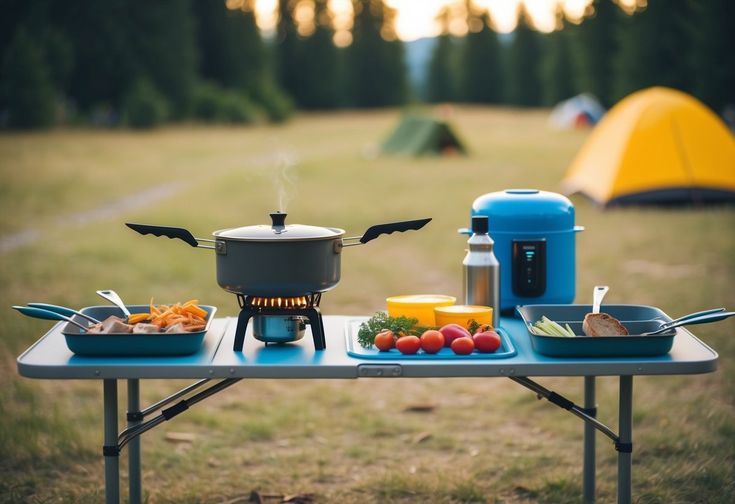
A well-organised camp kitchen makes outdoor cooking much easier. Instead of placing everything randomly around the campsite, establish separate areas for preparation, cooking, serving and cleaning.
A simple layout might include:
- Preparation area: Cutting board, knife and ingredients.
- Cooking area: Stove or grill and cookware.
- Serving area: Plates, utensils and prepared food.
- Cleaning area: Water, soap and cleaning equipment.
- Storage area: Cooler, dry food containers and waste bags.
Keeping these areas organised reduces unnecessary movement and makes cooking safer and more efficient.
Outdoor Cooking Essentials for Different Trips
Not every camping trip requires the same equipment. Matching your gear to the type of adventure can prevent you from carrying unnecessary items.
For Backpacking
Prioritise lightweight and compact equipment:
- Compact stove.
- Lightweight pot.
- Small fuel system.
- Spork or compact utensils.
- Collapsible cup.
- Lightweight food containers.
For Family Camping
A larger setup may be more appropriate:
- Two-burner camping stove.
- Larger cookware.
- Portable grill.
- Large cooler.
- Multiple plates and utensils.
- Folding preparation table.
For Weekend Car Camping
You can balance comfort and portability with:
- Portable stove or grill.
- Medium-sized cookware set.
- Cooler.
- Folding table.
- Reusable dinnerware.
- Food-storage containers.
How to Pack Outdoor Cooking Gear Efficiently
Packing efficiently helps prevent your cooking equipment from becoming a burden. Group similar items together so that you can quickly locate what you need.
For example, keep cookware together, store utensils in one container and separate food-storage equipment from fuel.
A useful packing checklist includes:
- Stove or grill.
- Fuel and compatible accessories.
- Cooking pots and pans.
- Utensils.
- Plates and cups.
- Cooler or food-storage container.
- Cleaning supplies.
- Water containers.
- Waste bags.
- Fire-safety equipment where appropriate.
Check local campsite rules before travelling because regulations regarding fires, fuel appliances and food storage can vary.
FAQs
1. What outdoor cooking gear do I need for camping?
The basic essentials include a suitable camping stove or cooking appliance, cookware, utensils, food-storage equipment and a reliable cooler when chilled food is required.
2. Is a portable grill better than a camping stove?
Neither is universally better. A stove offers greater flexibility for boiling and pan cooking, while a portable grill is ideal when grilled food is your priority.
3. What cookware is best for camping?
Lightweight, durable cookware that matches your stove or grill is generally the most practical choice. Nesting sets are particularly useful when storage space is limited.
4. Do I need a cooler for a weekend camping trip?
A cooler is useful when you’re carrying perishable foods or drinks that need to remain chilled. For trips based entirely around shelf-stable foods, it may not be necessary.
5. How do I choose the right camping stove?
Consider the number of people you’re feeding, cooking style, stove weight, burner count, fuel availability and weather conditions at your destination.
Conclusion
The best outdoor cooking gear is equipment that matches your camping style rather than simply the biggest or most feature-packed option. A solo backpacker may need little more than a compact stove and lightweight cookware, while a family camping at a UK campsite may benefit from a larger stove, cooler, portable grill and complete camp kitchen. Start with the outdoor cooking essentials, then add equipment according to the meals you plan to prepare and the space available in your vehicle or backpack. Pay particular attention to fuel compatibility, food storage, weather conditions and safe cooking practices. With the right combination of camping cooking equipment, practical cookware and organised storage, preparing meals outdoors can become one of the most enjoyable parts of a camping trip. Ready to upgrade your campsite kitchen? Explore outdoor cooking gear and build a practical setup for your next camping trip or weekend adventure.